
Video production services: A complete guide for businesses
Video has become essential for businesses that want to connect with their audience. But if you have never worked with a professional video team before, the world of video production services can feel overwhelming. What do these services actually include? How much should you expect to pay? And how do you choose the right partner for your project?
Let's break it down.
What are video production services?
Video production services cover the entire process of creating professional video content, from the initial concept to the final delivered file. It is not just about showing up with a camera and shooting. A full-service production company handles everything needed to transform your idea into a polished video that achieves your business goals.
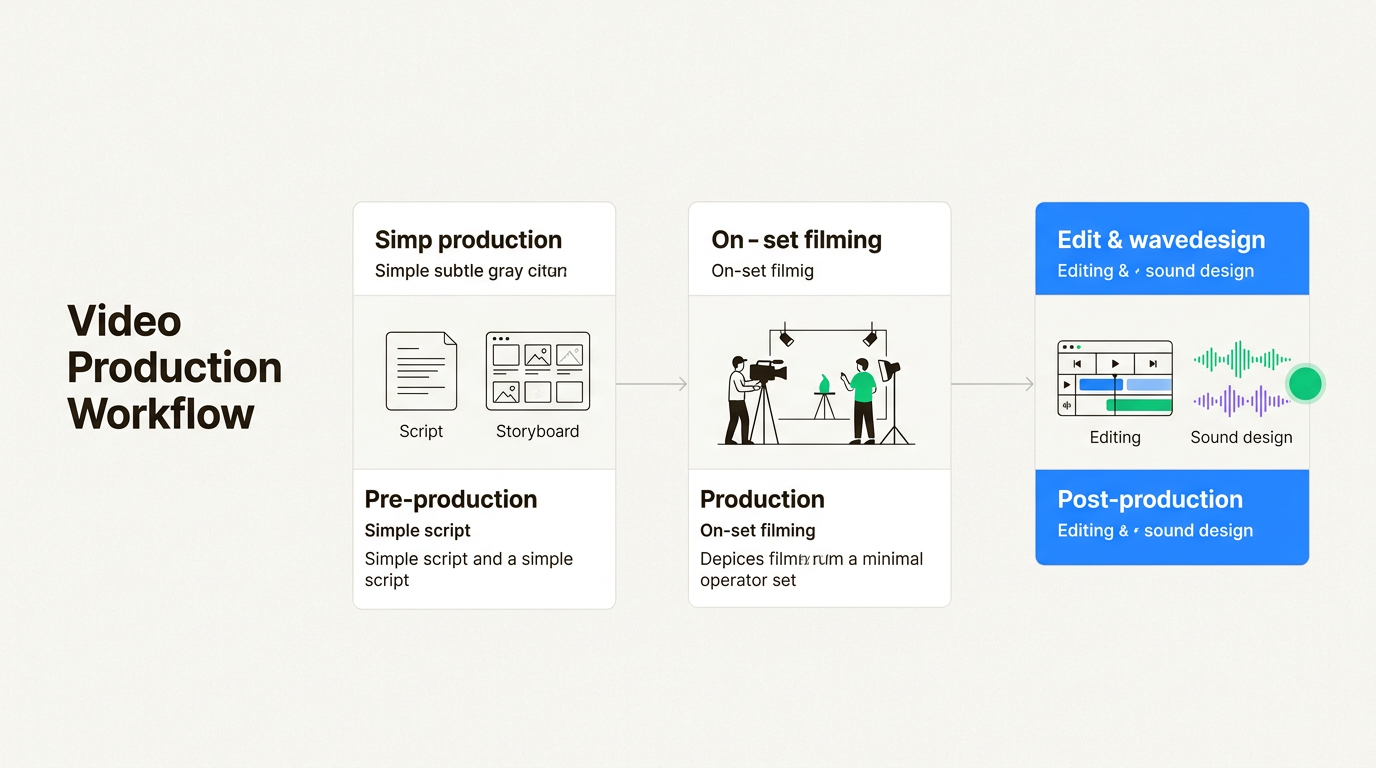
The process breaks down into three distinct phases:
Pre-production is where the foundation is laid. This includes creative development, scriptwriting, storyboarding, location scouting, casting, and creating detailed production schedules. During this phase, the production team works with you to understand your objectives, define the message, and plan every shot before filming begins.
Production is the actual filming phase. Professional crews arrive with cinema-grade cameras, lighting equipment, audio gear, and the expertise to capture high-quality footage. This includes cinematography, directing talent, managing the set, and ensuring every shot meets the creative vision established during pre-production.
Post-production transforms raw footage into the final product. Editors assemble the story, colorists grade the footage for visual consistency, sound designers mix audio and add music, and motion graphics artists create any needed animations or titles. The final deliverables are then formatted for your intended platforms, whether that is broadcast television, social media, or your website.
The scope of video production services varies widely depending on your needs. A simple corporate interview might require a small crew and minimal post-production. A commercial campaign with multiple locations, actors, and complex graphics will involve significantly more resources and expertise. Understanding these phases helps you evaluate what level of service your project actually requires.
Types of video production services
Not all video production is the same. Different projects require different approaches, equipment, and expertise. Here is how professional video production services are typically categorized.
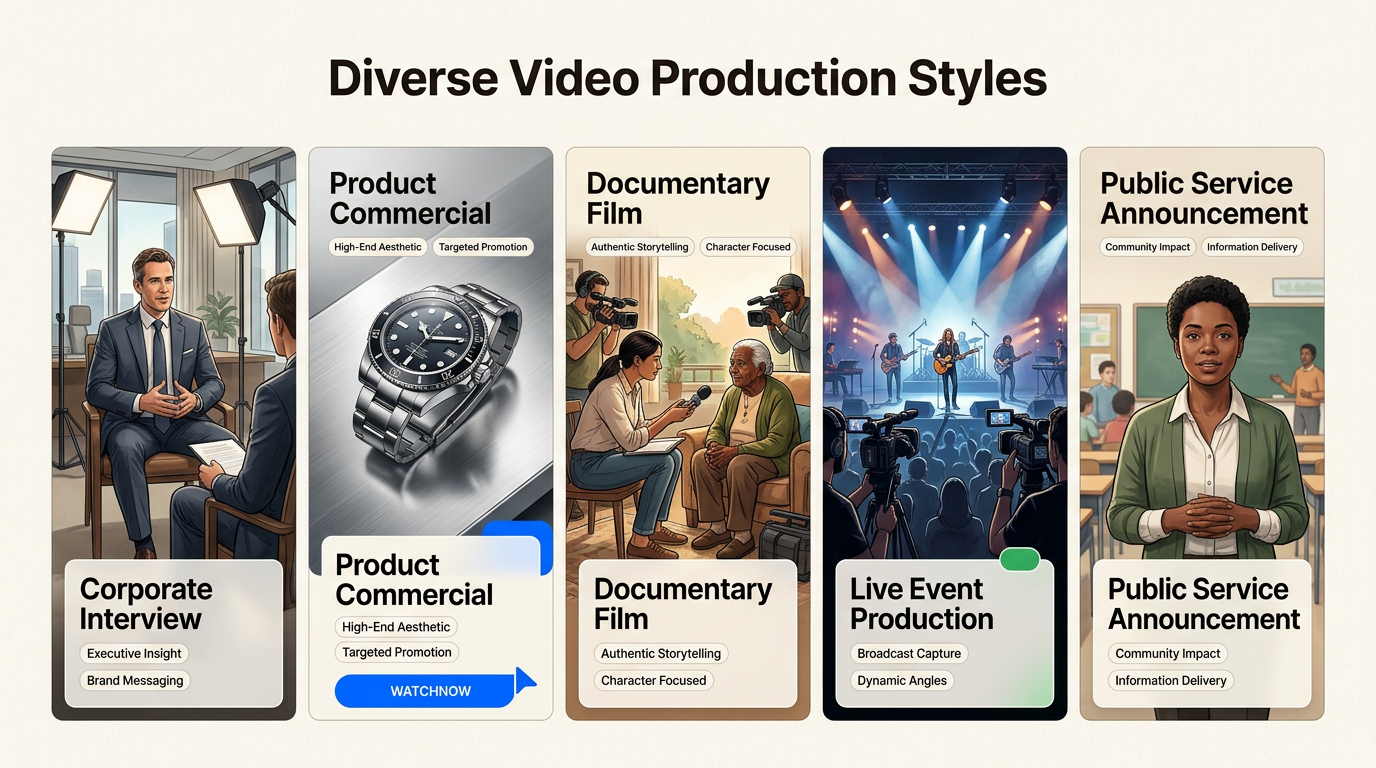
Corporate video production
Corporate videos serve internal and B2B communication needs. This includes training videos that onboard new employees, investor relations content that builds confidence in your company, executive messages that align teams around company goals, and recruitment videos that attract talent.
The tone here is professional and clear. These videos prioritize information delivery while maintaining engagement. Production values are high, but the focus is on authenticity and clarity rather than entertainment. Corporate video production typically involves working within brand guidelines and often requires coordination with internal stakeholders across departments.
Commercial and advertising video
Commercial production is designed to sell products, build brand awareness, or drive specific actions. This includes television commercials, digital advertising content, product launch videos, and promotional campaigns.
The production value for commercials tends to be higher, with more emphasis on visual impact and emotional storytelling. These projects often involve larger crews, location shooting, professional talent, and extensive post-production including color grading, sound design, and motion graphics. The goal is to create content that cuts through the noise and leaves a lasting impression on viewers.
Brand storytelling and documentary films
This category focuses on authentic storytelling rather than scripted marketing messages. Documentary impact films highlight the real-world work of nonprofits, universities, and mission-driven organizations. Brand documentaries give audiences an inside look at company culture, values, and the people behind the products.
The approach here is journalistic and human-centered. Instead of actors reading scripts, you are filming real people sharing genuine experiences. This builds trust and credibility in ways that traditional advertising cannot match. The production process emphasizes interview techniques, capturing authentic moments, and weaving narratives that resonate emotionally with viewers.
Live event and broadcast production
Livestream and broadcast production covers conferences, public meetings, concerts, and corporate events that need to reach audiences in real-time or be recorded for later distribution. This requires specialized equipment including multi-camera setups, broadcast-grade audio systems, and streaming infrastructure.
The technical complexity is higher here because there are no second takes. Crews must capture everything as it happens while managing live switching between cameras, audio mixing, and streaming distribution. The production team also handles recording for post-event editing and distribution.
Government and public sector video
Government video production serves agencies and public organizations that need to communicate programs, initiatives, and community impact. This includes public meeting coverage, training materials for government employees, and promotional content for state or local initiatives.
These projects often involve navigating specific compliance requirements, working within procurement processes, and creating content that serves diverse public audiences. The tone is informative and accessible, ensuring complex information is communicated clearly to constituents.
The video production process explained
Understanding what happens during each phase of production helps you know what to expect and how to prepare. Here is how professional video production services typically unfold.
Pre-production: Planning for success
This phase sets the foundation for everything that follows. The production team begins with discovery sessions to understand your goals, audience, and key messages. From there, they develop creative concepts and present them for your feedback.
Once a direction is approved, the detailed planning begins. Scriptwriters draft narration and dialogue. Storyboard artists create visual sequences that map out each shot. Producers scout locations, secure permits, and cast talent if needed. The team creates comprehensive production schedules that coordinate crew, equipment, locations, and talent into an efficient shooting plan.
Budgets are finalized during pre-production based on the approved creative approach. This transparency ensures there are no surprises later and that resources are allocated appropriately across the project.
Production: Capturing the content
Production day is when planning meets execution. Professional crews arrive with cinema-grade equipment, typically shooting in 4K, 6K, or even 8K resolution to ensure maximum flexibility in post-production and future-proofing for different distribution formats.
The director guides the creative execution while the cinematographer (director of photography) manages lighting, camera placement, and shot composition. Audio technicians capture clean dialogue and ambient sound. Production assistants manage logistics and keep the shoot running on schedule.
For interviews and corporate content, the focus is on making subjects comfortable and capturing authentic responses. For commercial work, the emphasis shifts to precise execution of storyboards and getting multiple takes to ensure every moment is perfect.
Post-production: Bringing it all together
This is where the raw footage becomes a cohesive story. Editors review all captured content, select the best takes, and assemble them according to the approved script and storyboards. They work with pacing, transitions, and sequencing to maintain viewer engagement.
Colorists grade the footage to ensure visual consistency across different shots and lighting conditions. This step is crucial for achieving that cinematic look that distinguishes professional production. Sound designers clean up audio, add music licensed for your project, and create soundscapes that enhance the viewing experience.
Motion graphics artists add titles, lower thirds, animated logos, and any visual effects needed. Finally, the completed video is exported in multiple formats optimized for your distribution channels, whether that is broadcast, web, social media, or internal platforms.
Most professional services include revision rounds at key milestones, allowing you to provide feedback and refine the final product before delivery.
Video production pricing: What to expect
One of the most common questions businesses have is about cost. Let us address this directly.
Professional video production services typically fall into three pricing tiers:
Project Level
Price Range
Typical Deliverables
Entry Level
$5,000 – $10,000
Single-day shoots, simple corporate interviews, basic editing
Mid-Range
$10,000 – $50,000
Commercial campaigns, brand films, multi-location productions
Premium
$50,000+
High-end commercials, complex productions, feature content
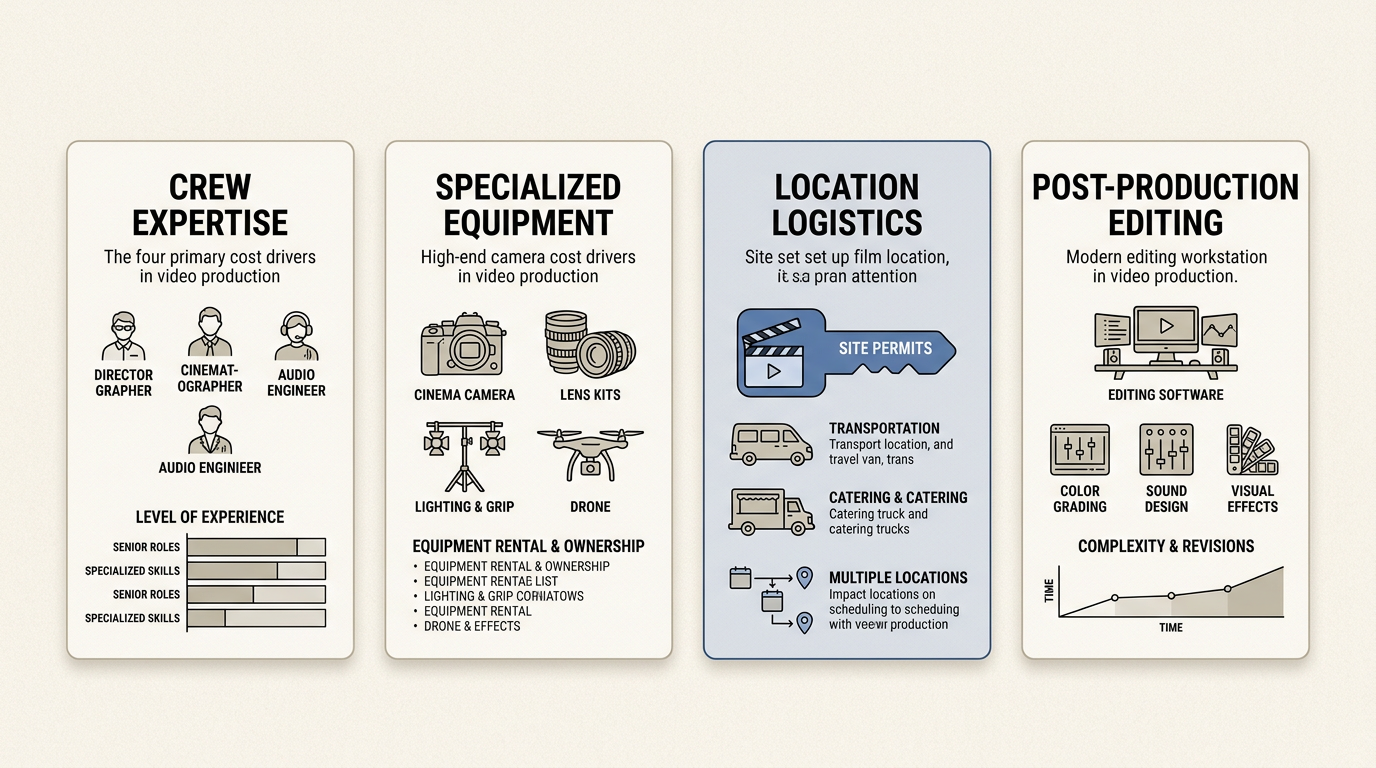
Several factors drive these price differences:
Crew size and expertise significantly impact costs. A small crew with a single camera operator costs less than a full team with dedicated directors, cinematographers, audio engineers, and production assistants. Specialized skills like drone operation or advanced color grading add to the budget.
Equipment requirements vary by project. Cinema-grade cameras, professional lighting packages, and specialized gear like gimbals or jibs represent significant investments that production companies factor into pricing.
Location complexity affects both time and budget. Shooting in a conference room requires minimal setup. Filming across multiple locations, coordinating talent travel, or securing permits for public spaces adds logistical complexity and cost.
Post-production scope is often underestimated. Simple cuts with basic color correction are faster and less expensive than projects requiring extensive graphics, animation, sound design, or multiple revision rounds.
Industry data from Clutch.co shows established video production agencies typically charge $150-$199 per hour for their services. However, most projects are priced as flat fees based on the scope rather than hourly rates, giving you cost certainty upfront.
The key is finding a partner who provides transparent pricing and explains exactly what is included at each budget level. Be wary of quotes that seem significantly lower than market rates, as they often result in corners being cut or unexpected add-on fees later.
How to choose a video production company
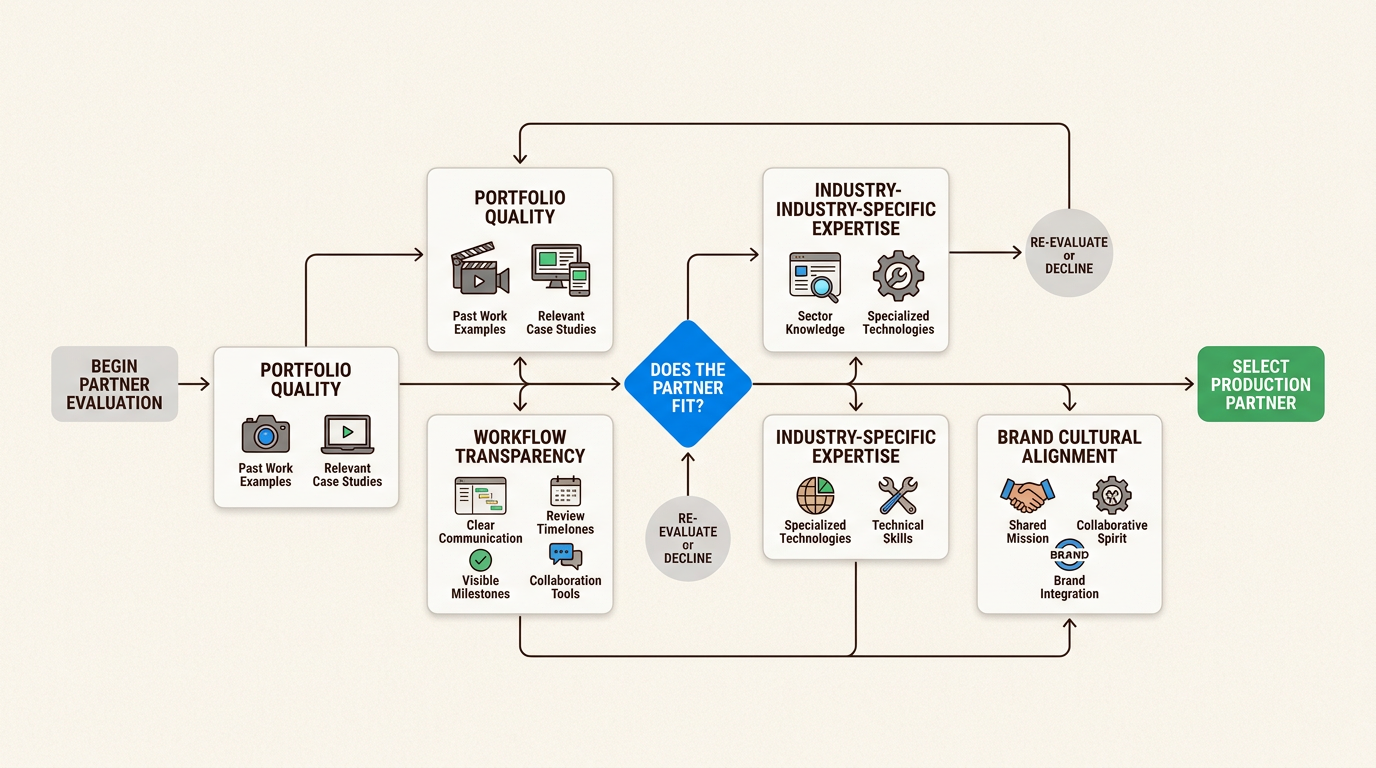
Selecting the right production partner is as important as the content itself. Here is what to evaluate.
Review their portfolio and past work
Start by examining the company's previous work. Look for projects similar to what you envision. Pay attention to production quality, storytelling approach, and whether their work aligns with your brand aesthetic.
Do not just watch the highlight reel. Ask to see full projects that demonstrate how they handle complete narratives, not just visually striking moments. Check client testimonials and, if possible, speak with past clients about their experience working with the team.
Assess their process and communication
A professional production company should have a clearly defined workflow. Ask how they handle pre-production, what their revision process looks like, and how they communicate throughout the project.
The best partners act as guides, not just service providers. They should ask probing questions about your goals, offer creative suggestions based on experience, and keep you informed without overwhelming you with every minor decision. Understanding how they handle feedback and revisions is crucial for a smooth collaboration.
Consider industry expertise
Experience in your specific sector matters. A team that has worked with healthcare clients understands HIPAA compliance and patient privacy concerns. A company experienced in government work knows procurement processes and public sector requirements.
Look for award recognition and professional credentials. Industry awards like the Addy Awards or recognition from professional organizations indicate a level of quality and peer respect that separates established professionals from newcomers.
Evaluate cultural fit
Technical skills are essential, but cultural alignment determines how smoothly the project runs. Do they understand your brand voice? Are they collaborative partners who welcome your input, or purely executional vendors who just shoot what you tell them?
The right fit depends on your needs. Some projects require a production company that brings creative vision and challenges your assumptions. Others need a team that executes your established vision precisely. Understanding this dynamic upfront prevents friction later.
Why work with Shutter Wave Studios
When evaluating video production partners, you want a team that combines technical excellence with strategic thinking. That is exactly what we have built at Shutter Wave Studios.
We are an award-winning studio with Gold Addy and Best of Show recognition, which means our work has been judged by industry peers and found to meet the highest standards. But awards only matter if they translate to results for your project.
Our approach centers on documentary-style authenticity. Instead of scripted marketing messages, we focus on capturing real stories and genuine human experiences. This builds trust with your audience in ways that traditional advertising cannot match. Our award-winning documentary for Delta State University demonstrates this commitment to authentic storytelling.
We have developed a full-service Waves Process that guides every project: Discover, Create, Engage. During Discovery, we craft personalized proposals tailored to your brand's vision. Creation involves multi-stage production to ensure high-quality deliverables. Engagement means strategy-led delivery designed to maximize results and drive growth.
While we are based in Mississippi and serve the Southeast, our capabilities extend nationwide. We have produced work for organizations like Miskelly Furniture, the Alzheimer's Association, Madison County, and the MHSAA. Our diverse expertise spans commercial, corporate, government, and mission-driven content.
What truly sets us apart is our data-informed creative approach. We do not just create content that looks exceptional. We ensure it performs across social media, streaming platforms, paid media, and search-driven campaigns. Every project is designed to deliver measurable results, not just beautiful footage.
If you are looking for a video production partner that combines cinematic quality with strategic thinking, we should talk. Learn more about our approach or reach out to discuss your project.
Start your video production project today
Professional video production is an investment, but it is one that pays dividends when done right. The key is understanding what you need, what it should cost, and how to evaluate potential partners.
Remember that the cheapest option rarely delivers the best value. Look for transparent pricing, a proven process, and a portfolio that demonstrates both technical skill and storytelling ability. The right production company acts as a strategic partner, not just a vendor.
Whether you need a corporate video to align your team, a commercial to launch a product, or a documentary to share your organization's impact, professional video production services can help you achieve your goals. The question is not whether video is worth the investment. It is whether you are ready to work with a team that can deliver results.
If you are ready to explore how professional video production can support your business objectives, request a quote and let us discuss your vision.
Frequently Asked Questions
What should businesses look for when evaluating video production services?
Look for a portfolio that demonstrates both technical quality and storytelling ability. Ask about their process, revision policies, and how they handle communication. Check client testimonials and, if possible, speak with past clients. The right partner should have a clear workflow, transparent pricing, and experience in your industry or with similar project types.
How long does the video production process typically take from start to finish?
Timelines vary based on project complexity. A simple corporate interview might take 2-4 weeks from kickoff to delivery. Commercial campaigns typically require 6-12 weeks. Documentary projects can span several months. Pre-production usually takes 1-3 weeks, production is often completed in 1-5 days depending on locations, and post-production ranges from 2-6 weeks. Rush timelines are possible but may increase costs.
What factors most significantly impact video production services pricing?
The main cost drivers are crew size and expertise, equipment requirements, location complexity, and post-production scope. Shooting in multiple locations, using specialized equipment like drones or cinema cameras, incorporating motion graphics or animation, and requiring extensive revision rounds all increase costs. Talent fees, location permits, and music licensing are additional factors that affect the final budget.
Can video production services handle projects for specific industries like healthcare or government?
Yes, experienced production companies regularly work with regulated industries. Healthcare projects require understanding of HIPAA compliance and patient privacy. Government work involves navigating procurement processes and specific approval workflows. When evaluating partners, ask about their experience in your sector and how they handle industry-specific requirements and compliance concerns.
What is the difference between hiring a freelancer and working with full-service video production services?
Freelancers often specialize in one aspect of production, such as shooting or editing, and may offer lower rates. Full-service production companies provide end-to-end capabilities including creative development, production, and post-production under one roof. They bring established workflows, insurance, backup equipment, and teams that can scale to project needs. For complex projects or when accountability matters, full-service providers offer advantages that justify the investment.
How do professional video production services ensure the final content aligns with our brand?
Professional teams begin with discovery sessions to understand your brand guidelines, tone of voice, and visual identity. They create mood boards and style frames for approval before production begins. During editing, they incorporate your feedback through structured revision rounds. Reputable companies build brand compliance checkpoints throughout the process and welcome your involvement at key decision points while managing day-to-day details so you are not overwhelmed.
What deliverables should we expect to receive from video production services?
Standard deliverables include the final edited video in multiple formats optimized for different platforms (broadcast, web, social media). You should also receive project files or raw footage archives depending on your agreement. Many companies provide additional assets like shorter social media cuts, still frames for promotional use, and caption files. Clarify deliverables and format specifications in your contract to ensure you receive everything needed for your distribution strategy.