
How to hire a business videographer: A complete guide for 2026
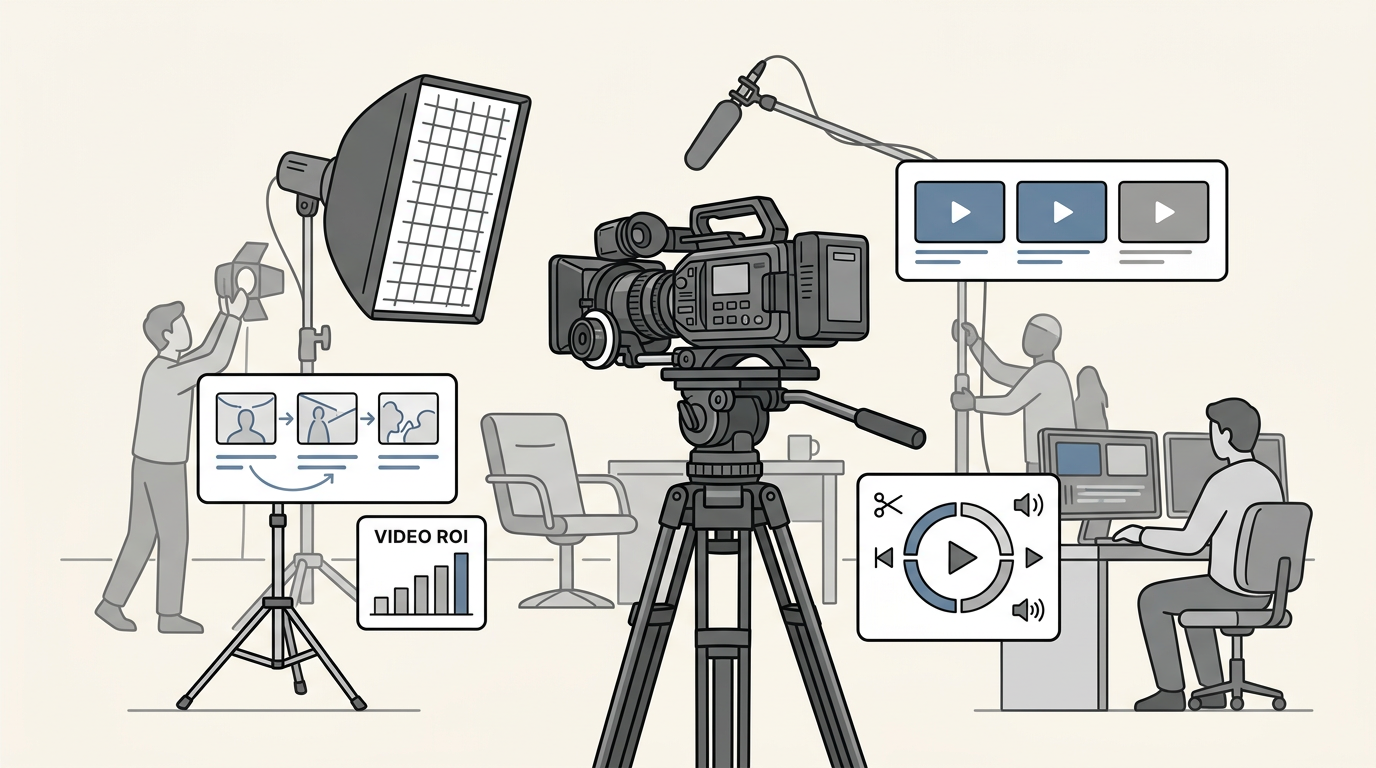
Video has become the default language of business communication. Whether you need to train employees, showcase a product, or capture an important company event, the quality of your video reflects directly on your brand. But here's the challenge: most business leaders know they need video, yet few understand how to evaluate videographers or what fair pricing looks like.
This guide walks you through everything you need to know before hiring a business videographer. You'll learn what separates professional studios from amateur shooters, understand realistic pricing, and know exactly what questions to ask during the vetting process.
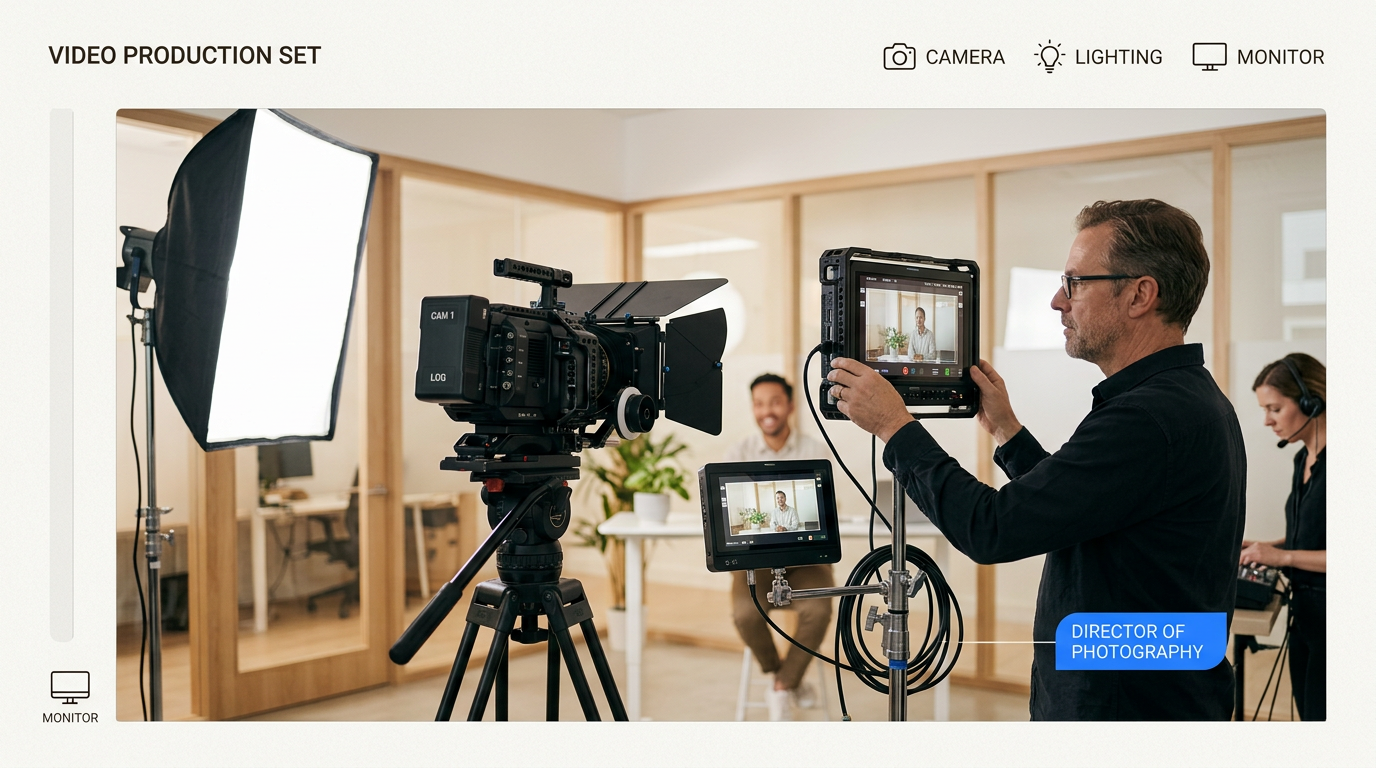
What does a business videographer do?
A business videographer specializes in creating video content for commercial purposes. Unlike wedding videographers or creative filmmakers, business videographers understand corporate messaging, brand guidelines, and the practical realities of shooting in office environments.
The types of videos they produce include:
Corporate profiles and culture videos that showcase your company to potential hires and clients
Customer testimonials that build trust with prospects
Product demonstrations that explain complex offerings clearly
Training and educational content for internal teams
Event coverage for conferences, launches, and company milestones
Commercials and promotional content for marketing campaigns
There's an important distinction between a solo videographer and a full production company. A solo shooter typically handles everything themselves: filming, audio, lighting, and editing. This works well for simple interview setups or small events. A corporate video production company brings a crew with specialized roles: a director of photography for camera work, a sound operator for audio, gaffers for lighting, and dedicated editors. This becomes essential for complex shoots with multiple locations, interviews, or high production values.
How much does a business videographer cost?
Pricing varies dramatically based on project scope, crew size, and deliverables. Here's what you can realistically expect:
Project Type
Price Range
What's Included
Entry-level event coverage
$1,500 - $3,000
Single camera, basic audio, raw footage or simple edit
Interview/talking heads
$2,500 - $4,500
Two-camera setup, professional lighting, edited deliverable
Promotional video
$4,500 - $8,000
Multi-camera, scripting, graphics, professional voiceover
Brand story/cinematic
$8,000 - $25,000+
Multiple shoot days, advanced post-production, custom music
Several factors drive these costs. Crew size is the biggest variable. A single shooter costs less than a three-person crew, but they can't capture the same range of angles or handle complex lighting scenarios. Equipment matters too: professional cinema cameras, lighting packages, and audio gear represent significant investments that factor into rates.
According to industry research from Wyzowl, 91% of businesses now use video as a marketing tool, and 96% of marketers say video marketing has increased user understanding of their product or service. This demand has professionalized the industry and established clearer pricing tiers.
Post-production is often underestimated. Editing a two-minute promotional video can take 15-20 hours when you account for color correction, sound mixing, graphics, and revisions. Rush delivery typically adds 25-50% to the base price.
The cheapest option often costs more long-term. We've seen businesses pay twice: once for a budget shoot that produced unusable footage, then again to reshoot with professionals. When evaluating quotes, ask what's included and what would trigger additional fees. Request a detailed quote from any provider you're considering.
5 essential questions to ask before hiring
The vetting process separates professionals from pretenders. Ask these five questions during your initial conversations:
1. Can I see your portfolio of similar work?
Look for relevance, not just quality. A videographer who excels at wedding films may not understand corporate pacing or B-roll requirements. Pay attention to audio quality (often the giveaway between amateur and professional), lighting consistency, and whether the storytelling holds your attention.
2. What does your production process look like?
Established videographers follow a structured process. They should describe pre-production (scripting, location scouting, scheduling), production day logistics, and post-production workflow. Vague answers or "we'll figure it out on the day" are red flags.
3. What's included in your pricing?
Get specifics: number of shoot days, hours of coverage, deliverables (raw footage vs. edited pieces), revision rounds, and music licensing. Some quotes exclude essential elements like location permits, travel, or equipment rentals.
4. Who owns the final footage and usage rights?
Clarify licensing upfront. Most business videographers grant clients full usage rights for the final edited pieces, but raw footage may cost extra or remain with the studio. If you plan to repurpose content across multiple platforms, ensure your license covers all intended uses.
5. What happens if we need revisions?
Understand the revision policy. Professional studios typically include 2-3 rounds of revisions in their base price. After that, hourly rates apply. Ask how revision requests should be submitted and what the typical turnaround time is.
View our portfolio to see how we approach different project types.
What to look for in a videographer's portfolio
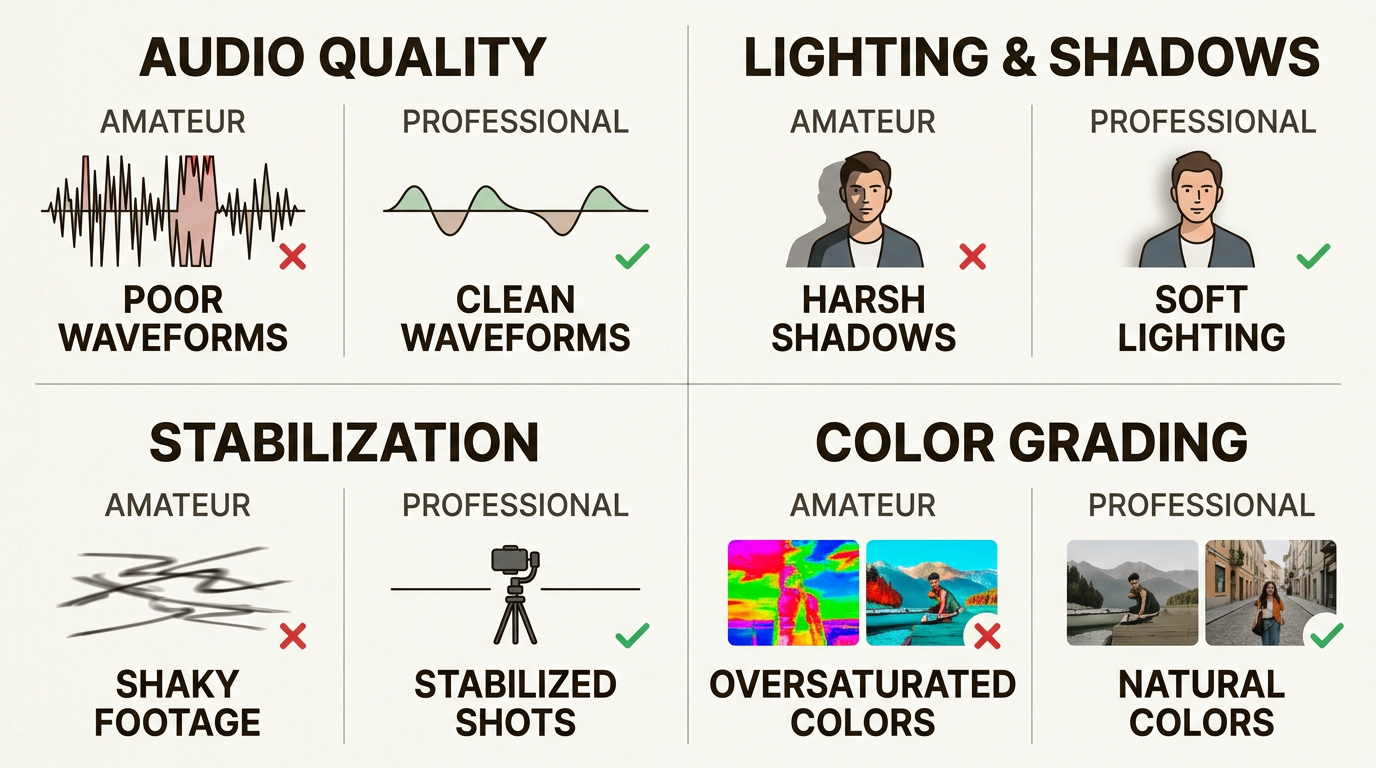
Evaluating video quality when you're not a filmmaker yourself can feel daunting. Focus on these four areas:
Technical execution
Is the audio clear and free of background noise or echo?
Is lighting even and flattering on subjects?
Are shots steady or distractingly shaky?
Do colors look natural and consistent throughout?
Storytelling ability
Does the video engage you, or does it feel like a recording? Even simple interview pieces should have rhythm, appropriate pacing, and a clear narrative arc. Watch with the sound off: does the visual storytelling still communicate something?
Client diversity
Has the videographer worked with businesses similar to yours? A studio that primarily serves tech startups may not understand the compliance requirements of healthcare or government clients. Look for experience in your industry or with similar project types.
Range vs. specialization
Some videographers excel at one specific thing, like interview setups or event coverage. Others offer broader capabilities. Neither approach is wrong, but make sure their strengths align with your project's needs.
Our Roots of Impact documentary demonstrates how we approach storytelling for mission-driven organizations.
The production process: What to expect
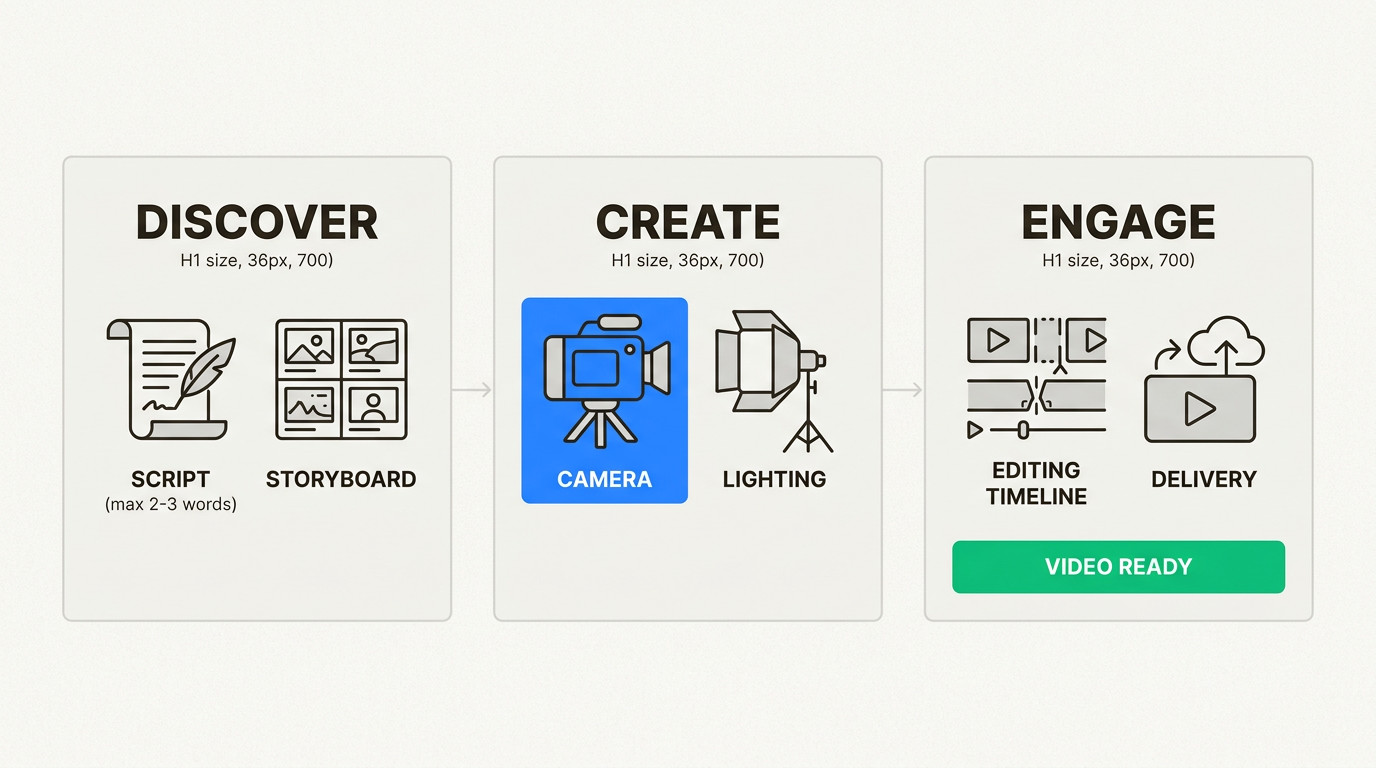
Understanding the typical workflow helps you prepare and sets realistic expectations. Most business video projects follow three phases:
Phase 1: Discovery and pre-production
This is where the foundation is laid. Expect initial meetings to discuss your goals, target audience, and key messages. The videographer should develop a creative treatment or script, scout locations, and create a detailed shot list and schedule. For complex projects, this phase takes 1-2 weeks.
Your involvement: Provide brand guidelines, key messages, and access to necessary locations or personnel. Review and approve scripts and creative direction.
Phase 2: Production
This is filming day (or days). A professional crew arrives with equipment, sets up lighting and audio, and captures the planned footage. Depending on the project, this might involve interviews, B-roll of your facilities, product demonstrations, or event coverage.
Your involvement: Ensure interview subjects are prepared and available. Provide access to spaces. Minimize interruptions during recording.
Phase 3: Post-production
Editing transforms raw footage into a polished final product. This includes organizing footage, selecting the best takes, cutting the narrative, color correction, audio mixing, adding graphics or music, and incorporating your feedback through revision rounds.
Your involvement: Provide timely feedback on rough cuts. Be specific about requested changes. Approve the final version.
Timeline expectations vary by project complexity, but most business videos take 4-8 weeks from kickoff to final delivery. Rush projects are possible but cost more and may compromise quality.
Our documentary impact films showcase our approach to longer-form storytelling.
Local vs. remote: Finding videographers in your area
Hiring locally offers distinct advantages. Local videographers know the area: which locations require permits, how to handle regional weather challenges, and where to find reliable crew if additional help is needed. They don't charge travel expenses, and coordination is simpler when you're in the same time zone.
For businesses in Mississippi, the Jackson metro area (including Brandon, Madison, Ridgeland, and Flowood) has several video production options. The key is finding a studio that combines local accessibility with professional capabilities.
There are situations where bringing in out-of-town talent makes sense. If you need highly specialized expertise (like aerial cinematography or advanced motion graphics) that isn't available locally, the additional travel costs may be worthwhile. National brands sometimes prefer working with their established production partners regardless of location.
Learn more about our team and our approach to serving Mississippi businesses.
Making your decision
Choosing the right business videographer comes down to four factors:
Portfolio quality Do they consistently produce work that meets your standards?
Process clarity Do they have a structured approach that minimizes surprises?
Pricing transparency Do you understand exactly what you're paying for?
Personality fit Do you communicate well and trust their judgment?
Get proposals from 2-3 providers for comparison. The lowest bid isn't always the best value. Look for the provider who best understands your goals and demonstrates the capabilities to achieve them.
At Shutter Wave Studios, our "Waves" process (Discover, Create, Engage) ensures every project starts with clear objectives and ends with measurable results. We've earned Gold Addy and Best of Show awards for our work with organizations like Delta State University, Miskelly Furniture, and the Alzheimer's Association.
Explore our commercial video services to see how we can support your next project.
Start your business video project today
Professional video isn't a luxury anymore. It's how businesses communicate internally, market externally, and build trust with their audiences. The investment pays dividends through increased engagement, clearer messaging, and stronger brand perception.
The key is choosing a partner who understands both the technical craft and your business objectives. Someone who asks the right questions, manages the details, and delivers content that performs.
If you're considering a business video project in Mississippi, we'd welcome the conversation. Request a quote and let's discuss how strategic storytelling can build trust and inspire action for your organization.
Frequently Asked Questions
How much should I budget for a business videographer for a small project?
For simple interview setups or event coverage, plan for $1,500 to $3,000. This typically covers a half-day shoot with a single camera operator and basic editing. If you need multiple locations, advanced graphics, or a faster turnaround, expect to invest more.
What makes a business videographer different from other types of videographers?
Business videographers specialize in commercial content. They understand corporate messaging, brand consistency, and the practical constraints of shooting in office environments. Unlike wedding or creative filmmakers, they focus on clear communication and measurable business outcomes rather than artistic expression alone.
How long does it take to produce a business video from start to finish?
Most projects take 4-8 weeks. Simple interview pieces might be faster, while complex productions with multiple shoot days or extensive animation could take longer. The timeline breaks down roughly as: 1-2 weeks for pre-production, 1-3 days for filming, and 2-4 weeks for editing and revisions.
Should I hire a solo videographer or a production company?
It depends on your project's complexity. Solo shooters work well for simple interview setups or small events. Production companies with dedicated crews become essential for multi-camera shoots, complex lighting scenarios, or projects requiring specialized roles like sound operators or gaffers.
What should I prepare before meeting with a business videographer?
Come prepared with: your goals for the video (what should viewers know, feel, or do?), examples of videos you like (and what you like about them), your timeline, and your budget range. Also identify who will be involved in approvals to avoid revision delays later.
Do I own the footage once the project is complete?
Ownership varies by contract. Most videographers grant clients full usage rights to the final edited pieces, but raw footage may remain with the studio or cost extra to purchase. Clarify licensing terms upfront, especially if you plan to repurpose content across multiple platforms or campaigns.